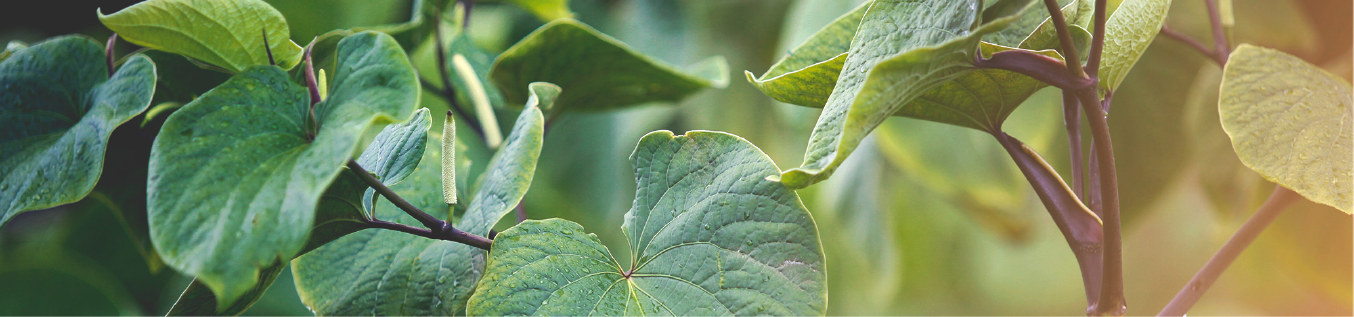
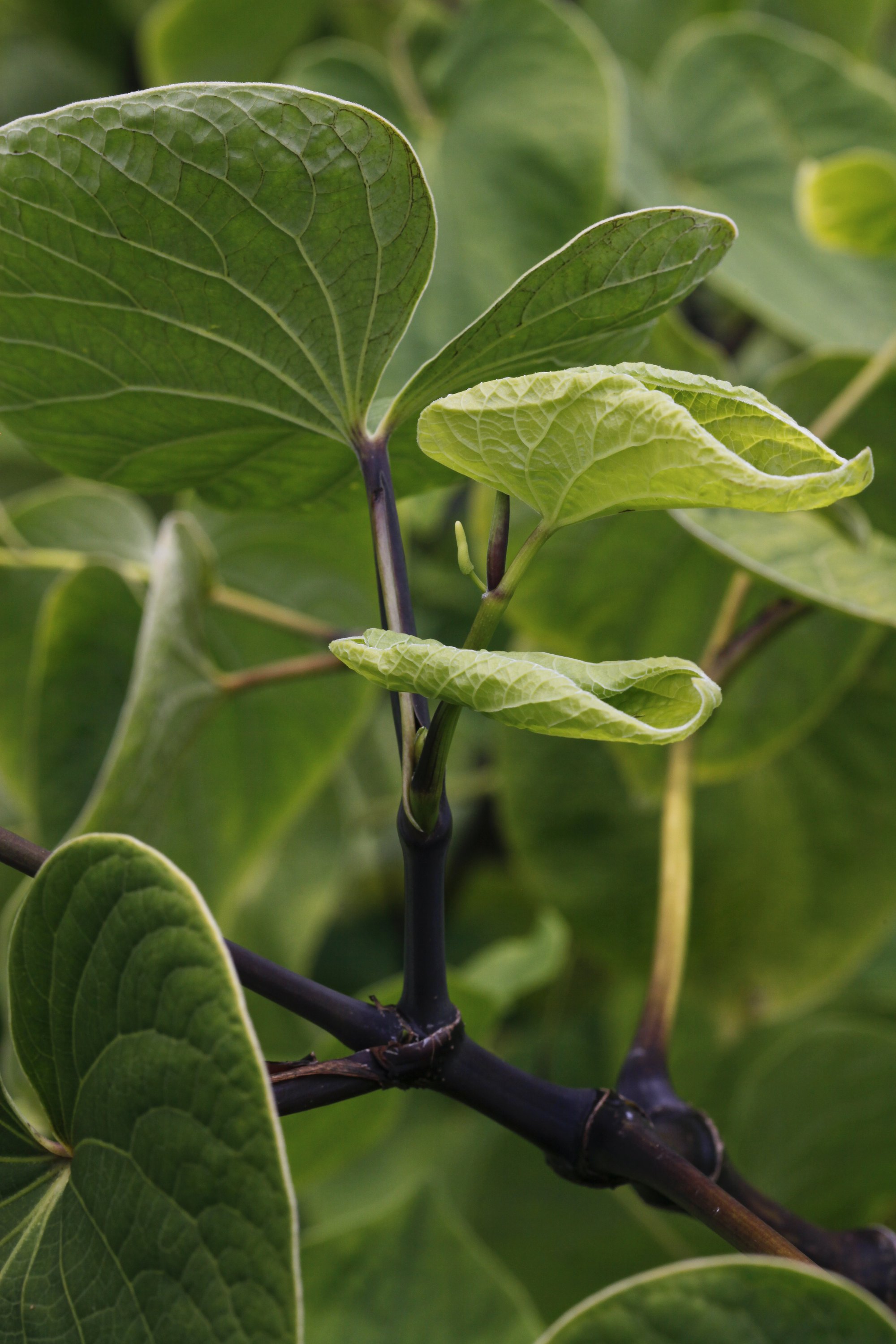
Kava plant leaves close-up

American Kava Association

Rooted in Research.Grown in America.

Since 2014, the American Kava Association has served as the nation's first trade organization dedicated to advancing kava science, developing quality and safety standards, supporting and training American kava farmers, publishing research and technical literature, and promoting and documenting the emergence of a distinctly American kava culture. The Association also serves as the official certification body for the American Kava Certified™ Geographical Indicator for kava grown in the Americas.

14Member Farms spanning 53+ acres
19Research papers and technical documents
6Beverage Grade varieties
500+American Kava Bars in 31 states
21MKava Drinkers in America

Our Mission

Promoting American Kava Science, Cultivation and Culture

The American Kava Association advances kava science, cultivation, quality, and culture in the United States — establishing evidence-based safety standards, training American farmers, and publishing research and technical literature. We recognize kava's origins and enduring importance throughout the Pacific while documenting the emergence of a distinctly American kava culture shaped by Pacific traditions, domestic agriculture, scientific inquiry, commercial innovation, and the communities that have made kava part of American life.

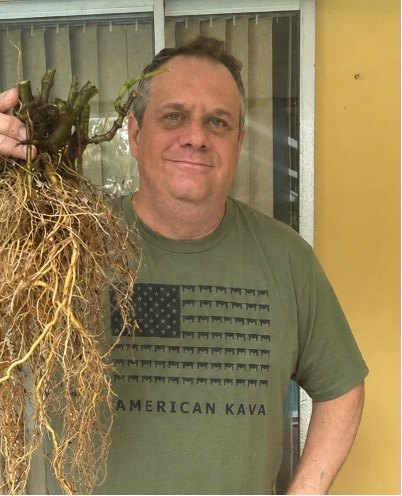
Person holding a kava plant

"Established 2014 · Las Vegas, NV"

Research Hub

Advancing the research on Kava

Access Full Repository →

About this library

Most of the work below is written by members of the Association, and in several cases the authors have a commercial interest in the findings. Every published paper states its conflicts of interest in full, along with the limitations of its own design. Readers should weigh them accordingly.

White Paper
Published by the Association. Reviewed internally by the authors, and in some cases by outside researchers; the review status is stated on each paper's cover.
Journal Article
Written for submission to an external peer-reviewed journal. Where a paper is still in review, it says so.
Technical Report
Method, protocol or measurement work released for practical use rather than for the literature.
Field Study
Observational or trial work carried out at a grower site rather than in a laboratory.
01

Soft-Stem Propagation of Piper methysticum Using Peat-Based Media and Aeroponic Cloning Systems

The first study to root kava from soft, herbaceous stem cuttings — the material every extension guide tells growers to throw away. Peat cubes and aeroponic cloners both matched the success rate of traditional woody nodal cuttings, in a fraction of the time, without cutting down a mother plant.

Tyler Blythe, Jeffrey Bowman, Matthew Masifilo · 2026 · Technical White Paper · No. 1

White PaperFull discussionRead the study →
02

Where the Kavalactones Go: A Mass Balance of the American Kava Beverage

The paper that puts American-grown kava on the record. All three cultivars confirmed as Piper methysticum by HPTLC, all three beverage grade with low flavokavains, and servings of 188–452 mg per 125 mL — at or above published figures for traditional Pacific preparations. It is also the first closed mass balance of the short warm-water extraction that American kava bars actually use on fresh-frozen root.

Tyler Blythe, Jeffrey Bowman, Matthew Masifilo · 2026 · Technical White Paper · No. 2

White PaperFull discussionRead the study →
03

What pH Does, and Does Not, Do

The trade argues about water chemistry and has never measured it. Nine preparations across three cultivars and three pH values: the drink's chemotype never moved, and only one cultivar in three gained any yield from acidifying. A version 1.0a release that also withdraws a claim the authors' own earlier draft had made.

Tyler Blythe, Jeffrey Bowman, Matthew Masifilo · 2026 · Technical White Paper · No. 3

White PaperFull discussionRead the study →
04

Outdoor Nursery Propagation of Kava (Piper methysticum) by Air Layering

Air layering rooted 75.8% of kava layers at 21 days, held steady across summer, autumn and winter, and every rooted layer survived transplant — all outdoors, with no greenhouse, no misting and no mother plant destroyed. The paper is unusually frank about what its design cannot show.

Tyler Blythe, Jeffrey Bowman, Brianna McDonnell · 2026 · Technical White Paper · No. 4

Field StudyFull discussionRead the study →
05

Standardized Preparation and Extraction Efficiency of Traditional Aqueous Kava Beverages

Traditional kava is a suspension, not a solution. A full mass balance across four varieties found that roughly nine parts in ten of the kavalactone reaching the cup rides through the strainer on fine particles — which makes pore size and grind, not water temperature or pH, the real controls on potency.

Tyler Blythe, Jeffrey Bowman · 2026 · Technical White Paper · No. 5

Technical ReportFull discussionRead the study →
06

Rapid Cultivar Determination of Kava Using Handheld NIRS

Can a handheld near-infrared scanner identify kava cultivar and chemotype on the spot? Accuracy, cost, and fitness for quality control and regulatory enforcement.

Technical ReportRead summary →
07

Kava Adoption in Young Slavic Adults from Families with Strict Religious Norms

Why kava has taken hold among young adults from strict religious Eastern European families, and what it offers in communities where alcohol is discouraged.

Journal ArticleRead summary →
08

High Efficiency Aeroponic Rooting and Root Architecture Engineering of Soft-Stem Kava Micro-Cuttings Derived from Tissue-Cultured Plants

An optimized aeroponic protocol for rooting tissue-cultured kava micro-cuttings — solving the lab-to-field transition and shaping root architecture on purpose.

Journal ArticleRead summary →
09

The Organoleptic Spectrum of Kava

A working vocabulary for kava's taste, aroma, mouthfeel, numbing and onset — and how cultivar, preparation and kavalactone profile move each of them.

White PaperRead summary →
10

Ethnogenesis of American Kava Culture

How a distinctly American kava culture formed out of Pacific Islander diaspora communities, commercial innovation, and a steadily widening circle of drinkers.

White PaperRead summary →
11

Daily Light Integral and Photoperiod Effects on Kavalactone Content, Cultivability, and Biomass Yield in Aeroponic American-Grown Piper methysticum

What light intensity and day length do to kavalactone content and root biomass in aeroponic kava, and how to manage both under lights or glass.

Journal ArticleRead summary →
12

The Shelf Life of Kava Study

Tracks kavalactone degradation, microbial load and sensory decline in prepared kava and dried root to set evidence-based storage and shelf-life guidelines.

Field StudyRead summary →
13

Mild-Condition Subcritical Water Extraction of Kavalactones from American-Grown Piper methysticum (Kali-ISA)

Subcritical water extraction of the Kali-ISA cultivar — yield, chemotype preservation, and whether the method scales for commercial kava processing.

Journal ArticleRead summary →
14

Hard Nak: Field Potency and Kavalactone Profile

A product sold on a reputation for strength, finally measured. One 12 oz Hard Nak shell carries 669 mg of kavalactone — 3.34 times the standard fresh Fijian pour, and more kavain alone than a Fresh Fiji shell delivers of all six kavalactones combined. The spent marc nobody was keeping rebrews to 29% above that comparator.

Tyler Blythe, Travis Lowin, Kyle Garrett · 2026 · Root of Happiness · Field Report No. 1

Field StudyFull discussionRead the study →
15

A Documented History of Kava in California

The Hawaiian Kingdom's own consul advertised 6,500 pounds of kava for sale in San Francisco in 1884. Sears was mail-ordering it to any household in America by 1900. Every one of those documents predates the 1958 GRAS cutoff — and in 2024 the FDA told Congress in writing that traditional kava is a conventional food, so the GRAS provision never applies to it at all.

Tyler Blythe · 2026 · Technical White Paper · No. 14

White PaperFull discussionRead the study →
16

The Documented History of Kava in Florida

Florida's foundational role in American kava — the Fijian and Tongan community roots of the first kava bars and the industry that grew out of them.

White PaperRead summary →
17

A Novel Low-Cost Method for Vegetative Propagation of Kava (Piper methysticum) Using Leaf-Stem Breakpoint Cuttings

A low-cost leaf-stem breakpoint cutting technique that reaches comparable rooting success with less material, less cost and less skill than conventional cuttings.

White PaperRead summary →
18

The American Kava Growers Manual, Second Edition

Fifteen chapters, ninety-one photographs, five named American cultivars and an enterprise budget that refuses to invent a yield figure. The second edition is the first book that treats mainland kava as a crop with a cost sheet rather than a curiosity — and the only one written from ground its authors are standing on.

American Kava Association · 2026 · Grower Resources · Manual Review

Technical ReportFull discussionRead the study →
19

Kava, Culture, and Commerce

Was kava ever money? Not quite — and the difference matters. An applied anthropologist argues that kava has always moved through several spheres of value at once, that there are kava cultures rather than one kava culture, and that commerce has historically created culture rather than destroying it. The clearest treatment of the appropriation debate we have read.

Douglas La Rose, MA · 2026 · Guest Paper · Republished with permission

Journal ArticleFull discussionRead the study →
American Kava Certified mark

Quality Standards

The American Kava Certification Mark

The AKA seal tells consumers that a product meets the highest standards for beverage grade kava purity, safety, and transparency. Six requirements. No exceptions.

Foundation Standard

The AKA has adopted the Harmonized Multinational Piper methysticum (Kava) Product Standards (2025) as the scientific foundation of our certification requirements — a landmark document facilitated by the Kava Coalition in 2024. The Coalition deserves recognition for assembling such a rigorous, consumer-safety-first standard — one that prioritizes noble variety integrity and scientific accountability across the global kava supply chain. The AKA is proud to build our certification framework upon it.

01

Beverage Grade Varieties Only

AKA-certified products must use exclusively noble kava cultivars — Boroguru, Melo Melo, Mahakea, Nene, Palarasul, or verified equivalents. Tudei and wild-harvested varieties are prohibited.

02

Kavalactone Chemotype Testing

All lots must be chemotyped by HPLC to confirm the kavalactone code begins with 2 or 4 (kavain- or dihydrokavain-dominant). Full chemotype reports are available per SKU.

03

Root-Only Material

Only lateral roots and stump are acceptable plant material. Leaves, stems, and peelings contain elevated pipermethystine and are categorically excluded.

04

Heavy Metal & Mycotoxin Panel

Third-party testing for lead, arsenic, mercury, cadmium, aflatoxins, and ochratoxin A. Certificates of analysis are held on file by the Association and are available on request for any certified lot.

05

American Origin

Products containing kava grown and processed in the United States receive AKA American Grown designation, promoting domestic industry and full supply-chain traceability.

06

Responsible Serving Guidelines

Certified kava bars and retailers must post AKA serving guidelines: traditional-strength serving sizes, no alcohol co-consumption recommendations, and abstention advisories for medications.

American Kava Farmers

The people growing kava on American soil

Join the Farmer Network →
Root of Happiness® · Kali Kava® · KavaLytics® — Sacramento, California · USDA Zone 10A

Sacramento, California · USDA Zone 10A

Tyler Blythe

Root of Happiness® · Kali Kava® · KavaLytics®

Kali-ISA, Kali-Hiwa, Kali-Loa, Kali-Kea

Co-founder of Root of Happiness and Kali Kava, growing in Sacramento's Zone 10A microclimate. Maintains the American Kava Association research greenhouse in Sacramento, where the cultivars reported in Technical White Papers No. 1, No. 2 and No. 4 were raised, and is corresponding author on all four published papers in the series.

Nakamal at Home® · The Nak® — Boca Raton, Florida · USDA Zone 10B

Boca Raton, Florida · USDA Zone 10B

Jeffrey Bowman

Nakamal at Home® · The Nak®

Kali-Rogu, Kali-Kea, Kali-Hiwa, Kali-ISA

Founder of Nakamal at Home and a founder of the American kava bar industry, growing in Boca Raton's Zone 10B. Runs the outdoor container nursery where the three-season air-layering trial reported in Technical White Paper No. 4 was carried out, and is a co-author on all four published papers.

Kavafied® · Alu Ball® — Sarasota, Florida · USDA Zone 10A

Sarasota, Florida · USDA Zone 10A

Matthew Masifilo

Kavafied® · Alu Ball®

Kali-ISA, Kali Hina

Founder of Kavafied and inventor of the Alu Ball, the 70 µm straining vessel evaluated in Technical White Paper No. 5. Grows in Sarasota's Zone 10A microclimate and is a co-author on Technical White Papers No. 1 and No. 2.

Grower Resources

The manual, and the protocols behind it

The American Kava Growers Manual is the definitive field reference for growing kava in the mainland United States, written by the three growers currently doing it in California and Florida. Alongside it, three of the Association's published papers are step-by-step propagation methods, written in enough detail to repeat — each stating its own rooting rates, its costs and its limitations.

Second edition · 2026

The American Kava Growers Manual

Fifteen chapters, ninety-one photographs, five named American cultivars, a written quality standard and an enterprise budget that refuses to invent a yield figure. Zones 9b–10b, Myakka sand and California high tunnels — the conditions the Pacific literature does not cover.

Read our review of the manual →

Culture & Heritage

3,000 years of tradition, carried forward with care

Kava reached the United States through Pacific Islander families, and everything that has grown here since rests on that. What follows is both halves of the story: the traditions American kava comes from, and the distinct culture now forming around it — the second told from the Association's own documentary research rather than from impression.

Documenting American Kava Culture

It started in Florida

America's first kava bars opened in Florida in the late 1990s, out of Fijian and Tongan community networks rather than out of the wellness trade. Nakamal at Home in Boca Raton — run by one of the growers in this Association — is among the founding businesses of the American kava bar industry. Florida remains the centre of gravity for American kava commerce, and the state's history is the closest thing the culture has to an origin story.

The Documented History of Kava in Florida →

California turned circles into an industry

California's kava culture began the same way — Pacific Islander community circles, in homes and church halls, long before anyone sold a shell commercially. What followed was different from Florida: a commercial kava bar industry, and later the first serious attempt to grow kava on the mainland. Both of the Association's research greenhouses trace back to that shift.

The Documented History of Kava in California →

Who drinks it now

A nationally representative survey of 2,000 US adults found 10.7% reporting past-year kava use, with the home the most frequently reported setting at 59.4% of users and kava bars reported as a purchase setting by 33.7%. The drinker is no longer only the bar regular. And the communities keep widening — one Association study documents adoption among young adults from strict religious Eastern European families, for whom an alcohol-free social drink fills a specific and previously unmet need.

Source: Mamallapalli, J. et al. Prevalence and use patterns of kava (Piper methysticum) in a US nationally representative sample. J. Ethnopharmacol. 2026, 355, 120617.

Kava Adoption in Young Slavic Adults →

A tradition being made, not inherited

What is forming here is not a transplanted nakamal and not a wellness product. It is a genuinely new thing, assembled out of Pacific Islander diaspora practice, American commercial invention, domestic agriculture and a steadily broadening circle of drinkers. The shell still passes, the bilo is still emptied in one, and someone still says bula — but the room, the hours, the music and the reasons people came are American. Documenting that as it happens, rather than reconstructing it later, is one of the reasons this Association exists.

Ethnogenesis of American Kava Culture →
The Traditions It Comes From

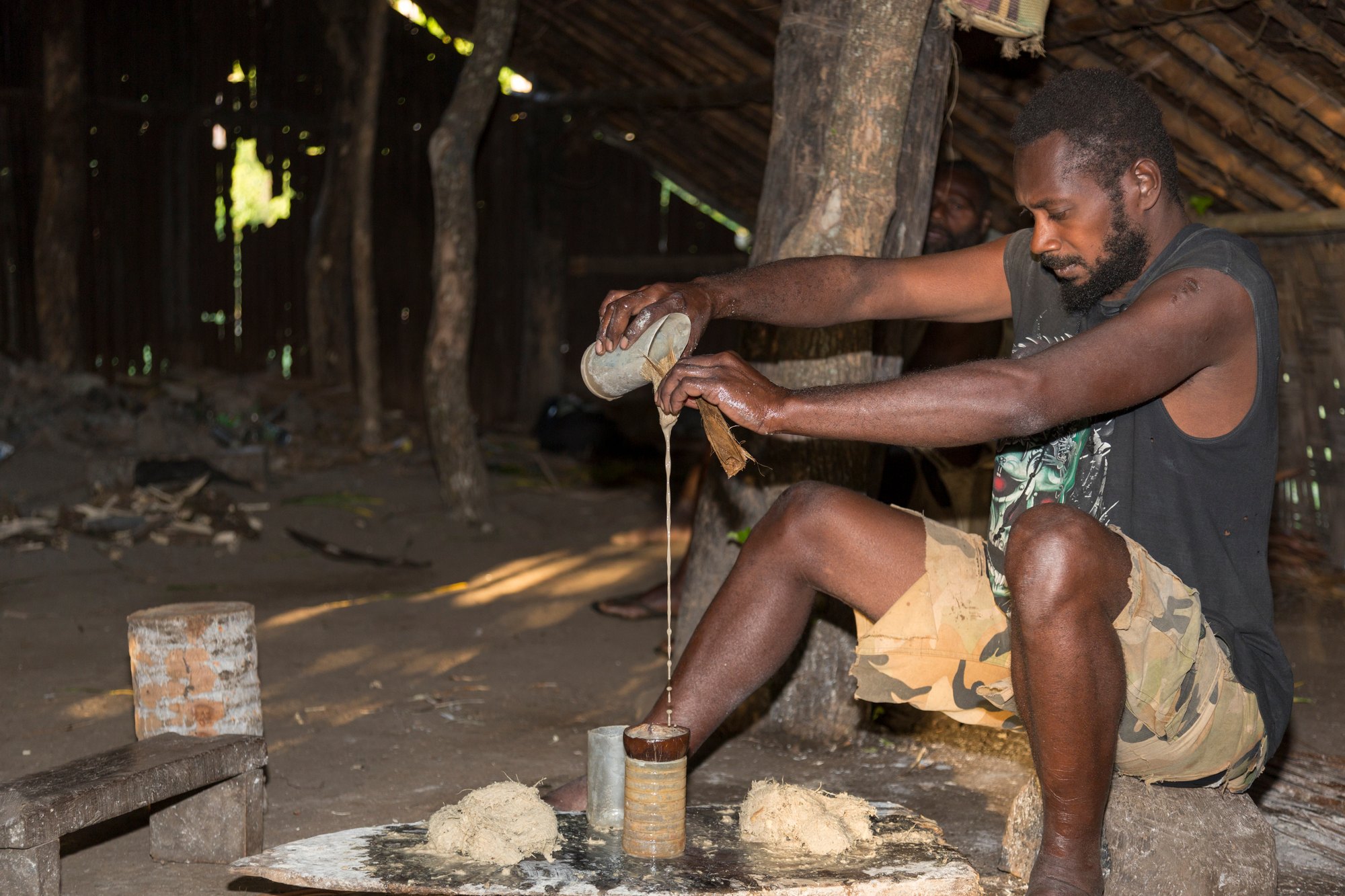
Hands preparing kava in a traditional bowl

The Nakamal

American kava bars are not nakamals in the traditional Vanuatu sense, nor should they pretend to be. But many carry forward an important part of their social logic: creating a dedicated place where people can gather without alcohol, remain for a while, talk face-to-face, and allow conversation to unfold at a slower pace. In this way, one of kava's most enduring cultural contributions to American life may be not the drink itself, but the kind of social space that forms around the bowl.

In Vanuatu, the nakamal is more than a place where kava is served. It is a social institution: a space where the ordinary pace of the day gives way to gathering, conversation, reflection, and community. Kava helps create that transition. As evening approaches, people come together not simply to consume a beverage, but to participate in a shared rhythm of presence and exchange.

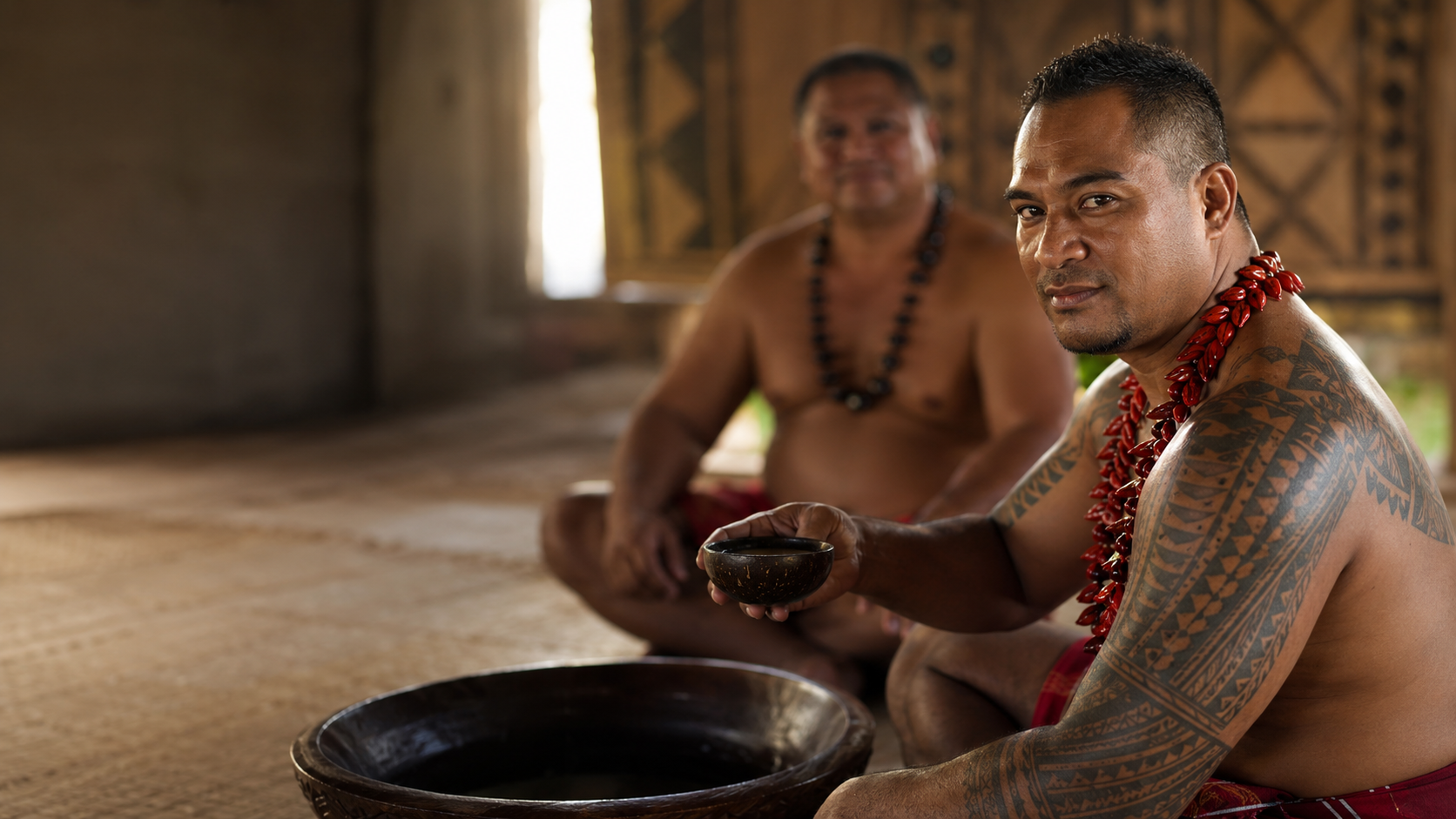
Coconut shell bowl on natural leaves

Ceremony & Protocol

The AKA encourages and promotes the development of a distinct American kava culture while recognizing that meaningful participation in kava culture begins with an understanding of the Pacific traditions from which it comes. Traditional preparation commonly involves pounding or grinding dried kava root, kneading and straining it through cloth or fiber into a communal tanoa, and serving it according to established cultural protocols that may reflect age, rank, role, and occasion. The AKA encourages American kava bars and consumers to learn, teach, and respectfully acknowledge these traditions — not simply reproduce their visual aesthetics — while allowing American kava culture to develop its own practices, customs, and identity.

"Kava is not a product to be optimized. It is a relationship to be honored — between plant and farmer, farmer and tradition, tradition and the people who gather around the bowl."

— AKA Cultural Advisory Council

Get Involved

Join the movement for quality American kava

Connect with American kava growers, industry members, and enthusiasts in our Facebook community.

Research & Updates Newsletter

Quarterly digest: new studies, certification news, farmer spotlights, and regulatory updates.

Thank you! Your submission has been received!
Oops! Something went wrong while submitting the form.